
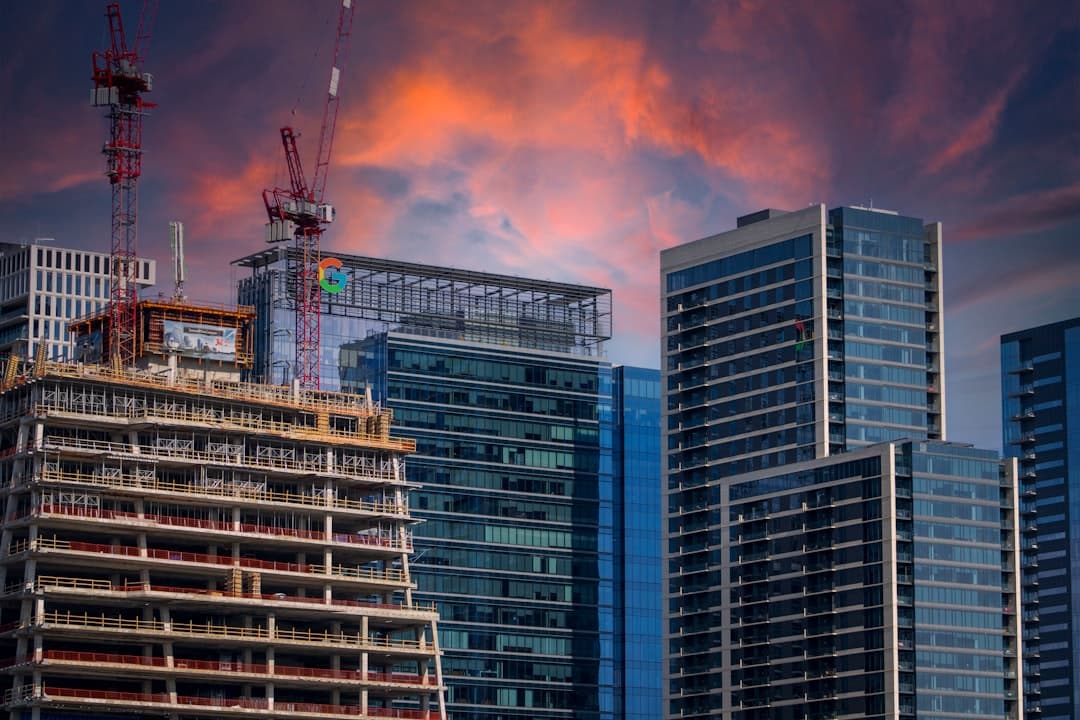
SB 840 took effect on September 1, 2025. That was one year ago today, which makes this a reasonable moment to ask what the statute actually did, rather than what it was predicted to do.
The short answer: a large inventory of commercial-zoned land in Austin stopped needing a rezoning to become housing. That is a bigger change than it sounds, because the rezoning was never really about the zoning. It was about the twelve to twenty-four months, the neighborhood campaign, the valid petition, and the Council vote at the end of it. Take that path away and you have changed the carry cost and the political risk premium on a whole class of parcel.
What follows is the statute, the things that stack on top of it, and the three places where people are still getting it wrong.
What SB 840 says
SB 840 was authored by Senator Hughes in the 89th Legislature. The Governor signed it on June 20, 2025 and it took effect September 1, 2025. Its caption covers "certain municipal regulation of certain mixed-use and multifamily residential development projects and conversion of certain commercial buildings to mixed-use and multifamily residential occupancy." (Texas Legislature Online)
Austin published its own implementation guidance rather than leaving developers to read the bill. The city's Development Services Department describes SB 840 as applying to "multifamily residential or mixed-use residential development in any commercial zone or any commercial use building," and states that a qualifying development may:
- reach a height of the greater of 45 feet or the height applicable to commercial uses on that site
- achieve density up to 54 units per acre
- use setbacks of the lesser of 25 feet or the commercial setbacks
- develop with unlimited floor-to-area ratio
That guidance came out in a September 2, 2025 DSD update announcing the law had taken effect that week, and the department published a separate SB 840 Implementation Guidelines document and held an informational session on October 21, 2025. (City of Austin DSD; Implementation Guidelines)
Read those four bullets together and the practical result is a by-right residential yield on land that was underwritten as retail or office.
It did not arrive alone
SB 840 gets the attention, but three other bills were signed the same day and took effect the same day, all from the 89th Legislature:
| Bill | What its caption covers |
|---|---|
| SB 15 (Bettencourt) | Size and density requirements for residential lots in certain municipalities |
| SB 2477 (Bettencourt) | Municipal regulation of office-to-residential and mixed-use conversion |
| HB 24 (Orr) | Procedures for changes to a zoning regulation or district boundary |
HB 24 is the one worth reading closely if you have ever lost a deal to organized opposition, because it governs how neighboring owners force a supermajority Council vote on a rezoning. We are not going to characterise its thresholds here. The bill text is short and the specifics matter more than any summary of them, including ours. Pull it before you rely on it. (SB 15 · SB 2477 · HB 24)
The local layer stacks on top
Austin spent the two years before SB 840 changing its own code, and those changes did not go away when the state acted. They compound.
Parking minimums are gone. Case C20-2023-010 eliminated minimum parking requirements citywide. A separate case, C20-2023-043, set parking maximums downtown for CBD and DMU zones.
HOME Phase 1 was adopted December 7, 2023 and took effect February 5, 2024. It permits up to three housing units on a property zoned SF-1, SF-2 or SF-3, with maximum building coverage of 40% and maximum impervious cover of 45%. It removed the cap on unrelated adults per unit and eliminated the primary-versus- secondary dwelling distinction. Subchapter F's 32-foot restriction still applies to single-family use.
HOME Phase 2 was adopted May 16, 2024, took effect August 16, 2024 and expanded citywide on November 16, 2024. It created a small-lot single-family use allowing one unit on lots of at least 1,800 square feet and less than 5,750 square feet. (City of Austin, HOME amendments)
A commercial parcel with no parking minimum, unlimited FAR and 54 units per acre by right is a materially different asset than the same parcel was in 2023. Most owners have not repriced for that, and most comparable sales still reflect the old entitlement path.
Three things people are still getting wrong
1. Underwriting a density bonus that was postponed, not adopted
This is the most expensive mistake we see, and it is free to avoid.
Austin's Land Development Code amendment tracker separates adopted cases from indefinitely postponed ones. Adopted includes C20-2023-044, which created the DB90 district, and C20-2024-004, the citywide density bonus program.
Indefinitely postponed includes the University Neighborhood Overlay update (C20-2024-010), density bonuses for Commercial Highway and Industrial zones (C20-2024-017 and C20-2024-022), and the South Central Waterfront combining district and density bonus program (C20-2022-003). (Austin LDC amendment tracker)
Those three postponements are, in effect, three submarkets where the local upzoning pathway is currently closed. A pro forma that depends on one of them is describing a building that cannot be permitted today.
The question to answer: name the density bonus you are relying on by case number, and confirm its current status on the tracker before it becomes a line in a model.
2. Assuming the by-right path is also the fast path
Being exempt from a Council vote is not the same as being exempt from review.
Austin published new plan review turnaround standards effective July 1, 2026 for residential and July 15, 2026 for commercial. New residential construction and additions carry a 10-business-day standard. Commercial under 10,000 square feet is 7 business days, 10,001 to 25,000 square feet is 10, and over 25,000 square feet is 20. There is also an AI Pre-Check that returns a free zoning-compliance report within one business day, covering zoning only, with every result verified by a human reviewer. It excludes PUDs, NCCDs and projects with approved site plans. (DSD, June 29, 2026 · AI Pre-Check)
Those are published targets. Whether the department is hitting them is a different number, and the city has not published it. Neither has it published the prior review times that its stated "59% faster for residential, 43% faster for commercial" improvement is measured against. So the honest version is that the direction of travel is real and documented, and the achieved performance is not public.
The question to answer: ask DSD for measured review times against the July 2026 standards, not the standards themselves. Build the carry model on the answer.
3. Treating the legal ground as settled
We can tell you that Austin's own HOME page describes the amendments and does not mention any court challenge. We cannot tell you that no challenge exists, because an absence of a statement is not a statement of absence, and HOME has been litigated in Texas courts.
If the durability of HOME matters to your basis, have a land use attorney confirm the current appellate posture. Do not take it from a city web page, and do not take it from us.
What this means for the next twelve months
Downtown supply is thinning while the entitlement path is widening, which is an unusual combination.
As of May 15, 2026, Downtown Austin Alliance data showed office vacancy above 20% and described as plateaued, residential vacancy down from roughly 18% at its 2024 peak to 15% in 2025, square footage under construction down to 2.94 million from 6.63 million a year earlier, and planned square footage down to 8.22 million from 11.54 million. (Community Impact)
A pipeline that fell by more than half in twelve months means deliveries in 2028 through 2030 land into a much thinner competitive set than deliveries in 2025 and 2026 did. Sites entitled under SB 840 now are sites delivering into that window.
The single highest-return diligence exercise available in Austin right now is also the least glamorous: run a commercial-zoning screen across a target submarket and test SB 840 yield on every parcel in it. Strip retail with a failing anchor, dead office, commercial-zoned land that has been sitting because a rezoning looked too hard. Most of it has not been looked at through this lens yet.
That is a spreadsheet exercise before it is a capital exercise, and it is the part of this work we most often get asked to do a second read on. If you have a parcel or a submarket in mind, get in touch.
This post is general information about land use policy in Central Texas. It is not legal, engineering or investment advice, and it is not a representation about any specific parcel. Statutes, case status and review times all change. Verify every date, figure and program status against the issuing agency or the bill text before relying on it.